
Ridid
Property Management System for Hotels
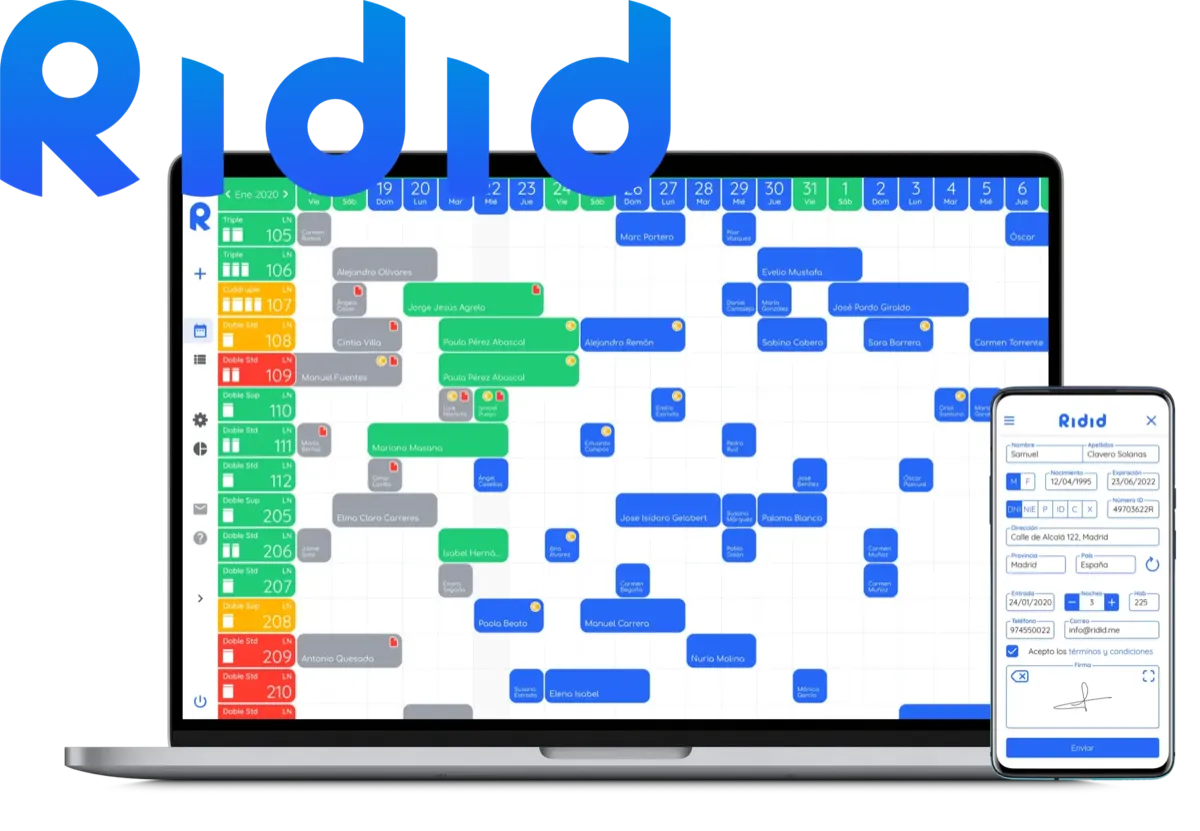
Built for the TravelTech sector since 2019, Ridid is a comprehensive property management system for small tourist accommodations. What started as a simple booking calendar evolved into a full-featured PMS over 2+ years of continuous development - booking flows, channel management, invoicing, and contactless check-in - driven by real user feedback from rural hotel owners who became our toughest critics and most valuable collaborators.
Development duration
2+ years (ongoing, product live)
Role
Senior Frontend Engineer & UX designer
Tools
Vue2, Bootstrap, Figma
Target Audience
Small tourist accommodation owners (25-65) with limited technical expertise
The Challenge:
Small accommodation owners in rural areas were struggling with fragmented solutions, separate tools for bookings, check-ins, invoicing, and channel management. Existing software was either too expensive, too complex, or solved only one problem at a time. They needed an affordable, all-in-one solution with a modern interface that non-technical users could operate without training.
My Role:
At Silatek, I led frontend development in a 4-person team. When our designer left early in the project, I took over all UX/UI responsibilities - owning the complete product experience from design to implementation.
- Led frontend development (Vue2, Bootstrap)
- Took over UX/UI design after designer departure
- Paper wireframing and user journey mapping
Product Evolution:
The product grew organically based on user needs, evolving from a simple tool to a comprehensive platform:
Started with booking calendar + police check-in scanner for phones and desktop scanner
Pivoted from native Android app to web app for better maintainability
Major technical upgrade: rebuilt entire front-end from Flask/Jinja to Vue2 mid-project
Added invoicing, government surveys, booking widget, and channel manager (WuBook integration)
COVID response: contactless pre-check-in and multi-establishment support
Architecture:
Ridid is not one app but several: the guest web app, auto check-in, the cleaning app and the operator back office, all built against a shared backend. A deliberate multi-client architecture, with the stack chosen per client (Vue 2 for the main panel, Nuxt 3 where SSR and fresh tooling paid off) and clear data and auth boundaries between them.
UX challenges:
The main challenge was making complex operations feel simple and intuitive. Our users, busy accommodation owners with limited tech experience, needed to complete tasks effortlessly without training. Key solutions included: a collapsible sidebar with clear labels for small screens, minimal yet self-explanatory text to prevent confusion, and an intuitive navigation structure for quick information access.
UI challenges:
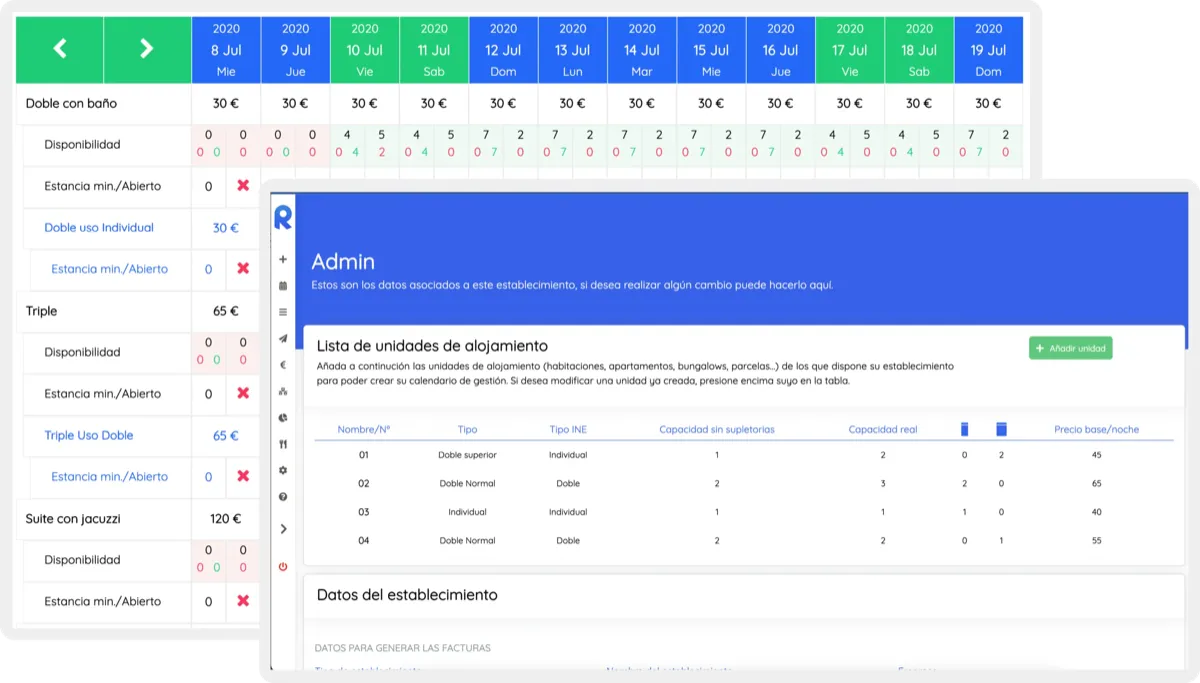
Presenting large datasets clearly while maintaining usability. For example, the channel manager needed to display pricing and availability across multiple platforms and date ranges simultaneously, requiring careful data hierarchy and visual organisation to prevent overwhelm.
Design Decisions:
With minimal initial design materials and experience, I focused on simplifying complex navigation into intuitive flows. The core principle: users don't read. Every screen needed to be self-explanatory with minimal text and clear visual hierarchy. I'm proud of achieving a consistent, clean design that busy hotel owners could use without training.
User-Driven Iterations:
Working with 5 rural hotels as our test group proved invaluable. They were tough critics who thoroughly tested every feature and provided constant feedback:
Redesigned data display after complaints, adding an improved calendar view
Added multiple invoice styles based on regional business requirements
Implemented area-specific government surveys as regulations changed
Key Features:
Booking Management
Calendar-based booking system with drag-and-drop reservations
Check-in Scanner
Mobile police check-in scanner, no reception desk needed
Invoicing System
Multiple invoice styles adapted to regional business requirements
Channel Manager
WuBook integration for multi-platform availability sync
── Examples of workflow ──
Results & Impact:
The product is still active with around 10 accommodations using it daily. While commercial growth was limited after our marketing lead left, the technical product succeeded, users love it and rely on it for their daily operations. This project taught me that great UX comes from listening to real users, not assumptions. Building with continuous feedback from demanding users produced a far better product than any amount of theoretical planning could have.
Landing page:
Release date: January 2023. Last update: December 2025.
Visit Website